
If you are comparing Flo vs Natural Cycles, the most important thing to know is that they are not really trying to do the exact same job. Flo is a broader period, ovulation, pregnancy, and perimenopause tracker with a usable free version. Natural Cycles is a paid, temperature-based fertility app that is also cleared by the FDA as birth control in the U.S. for adults 18 and older. That difference matters more than a simple star rating.
This comparison uses the latest publicly visible U.S. App Store and Google Play information available on September 29, 2026. Ratings and review counts change often, and store numbers are usually rounded.
Quick Summary
| Category | Flo | Natural Cycles |
|---|---|---|
| Best for | General cycle tracking, symptom logging, pregnancy tracking, and people who want to start free. | People who specifically want a temperature-based fertility app, including FDA-cleared non-hormonal birth control or more structured trying-to-conceive support. |
| Birth control | No. Flo says it is not a method of birth control. | Yes, in supported regions. Natural Cycles is FDA-cleared for contraception in the U.S. and says NC° Birth Control is 93% effective with typical use and 98% with intended use. |
| Free version | Yes. Flo offers free period and ovulation predictions, 80+ symptom tracking, reminders, Secret Chats, Anonymous Mode, and basic partner functions. | Not really as a full-use option. Natural Cycles says you need an active subscription to use the app. |
| Daily effort | Lower. You can use it mainly by logging your cycle and symptoms, with optional BBT and Apple Watch support. | Higher. It works around temperature data and compatible devices, and the company says the first 1 to 3 cycles can involve more Red Days while the algorithm learns your cycle. |
| Pricing | Less transparent. Flo officially says monthly and yearly subscriptions are available, but pricing varies by platform and promotions. | More straightforward. The U.S. App Store currently lists Monthly at $21.99 and Annual at $149.99. |
App Store and Google Play Ratings
| App | Platform | Rating | Number of Ratings/Reviews |
|---|---|---|---|
| Flo | Apple App Store (US) | 4.7/5 | 2M ratings |
| Flo | Google Play | 4.7/5 | About 5.1M reviews |
| Natural Cycles | Apple App Store (US) | 4.8/5 | 30K ratings |
| Natural Cycles | Google Play | 3.9/5 | About 23.4K reviews |
On raw store scores alone, both apps are well rated. Flo has a much larger review base, especially on Google Play, while Natural Cycles has a slightly higher U.S. App Store score but a lower Google Play score. That usually tells me Flo is the broader mainstream pick, while Natural Cycles is more specialized and may create stronger opinions because it asks more of the user. That last point is an inference based on the apps’ positioning and review patterns, not a direct store statement.
What Is the Main Difference Between Flo and Natural Cycles?
Flo is a multipurpose women’s health app. Its official materials focus on period tracking, ovulation predictions, pregnancy tracking, perimenopause support, symptom logging, expert content, and partner sharing. Flo also clearly states that it is not birth control.
Natural Cycles is closer to a regulated fertility tool. The FDA classified Natural Cycles as a Class II software application for contraception for women 18 and older, and the app is intended for preventing pregnancy or planning pregnancy using cycle data and temperature-based analysis. Natural Cycles also supports pregnancy, postpartum, and perimenopause modes, but contraception and fertility status are still the big differentiators.
So if your question is “Which app is better for basic cycle tracking?” Flo usually makes more sense. If your question is “Which app is built for non-hormonal birth control or more serious fertility monitoring?” Natural Cycles is the more relevant option.
Features Comparison
What Flo Does Well
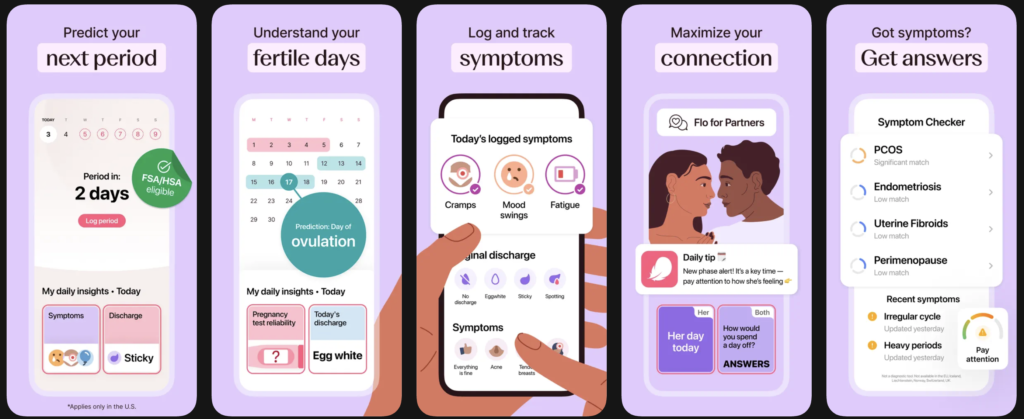
Flo’s biggest strength is breadth. The free version includes period and ovulation predictions, 80+ symptoms and events to track, custom reminders, Secret Chats, Anonymous Mode, and basic partner features. Premium adds cycle pattern analysis, expert-led content, unlimited access to its Health Assistant, Symptom Checker, and a personalized doctor’s report on iOS.
Flo also offers Apple Watch integration and supports BBT logging, but its overall design is still centered more on everyday tracking and education than on regulated contraception. That makes it easier to pick up casually.
What Natural Cycles Does Well
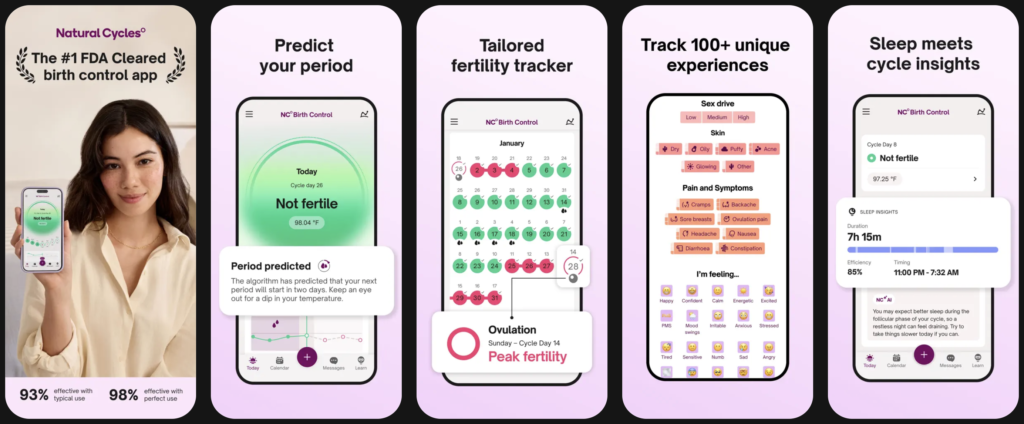
Natural Cycles is more focused. A subscription includes all NC° modes: Birth Control, Plan Pregnancy, Follow Pregnancy, Postpartum, and Perimenopause. The app works with temperature data from the NC° Band, Apple Watch, Oura Ring, compatible Garmin devices, and other approved integrations, depending on the device and market support.
The key feature is the daily fertility status based on body temperature and cycle data. That is what makes Natural Cycles fundamentally different from a typical period tracker. It is also why the app requires more consistency from the user than Flo does.
User Experience and Daily Effort
Flo is the easier app for low-maintenance use. You can start with period dates and symptom logs, use the free version indefinitely, and only upgrade if you want deeper analysis or more educational features. That lower barrier is a big reason it appeals to such a wide audience.
Natural Cycles has more friction. The company explains that it can take time for the algorithm to learn your cycle, especially during the first 1 to 3 cycles, and that the number of Red and Green Days varies based on regularity, frequency of data input, and temperature stability. In practical terms, it asks for a real routine.
That does not make Natural Cycles worse. It just means it is a better fit for someone willing to wear a compatible device or take consistent temperature measurements and act on the app’s fertility guidance. If you know you do not want that level of involvement, Flo is the easier choice.
Pricing and Subscription Value
Flo has the budget advantage because you can stay on the free tier. Officially, Flo says it offers monthly and yearly subscriptions, with promotional offers appearing through the app, notifications, or email. Its support content also says recurring offers can renew at weekly, monthly, or annual intervals depending on the plan you choose, which suggests offer structures can vary by platform or promotion.
The downside is pricing clarity. Flo’s help center does not publish one simple public U.S. price list. On the U.S. App Store, current in-app purchase listings include prices from $1.99 up to $59.99, which suggests multiple SKUs, plans, or promotional offers rather than one standard sticker price.
Natural Cycles is much easier to summarize on price. On the U.S. App Store, the app currently lists Monthly at $21.99 and Annual at $149.99. Natural Cycles says an active subscription is required, and its NC° Band page says the annual plan includes the NC° Band at no extra charge.
Subscription terms are also clearer on Natural Cycles. The company says subscriptions renew automatically unless canceled at least 24 hours before renewal, and already-paid subscription fees are non-refundable. Flo also uses auto-renewing subscriptions and tells users to cancel at least 24 hours before renewal, but refund handling depends on whether you purchased through Apple, Google Play, or Flo’s website.
If value means “cheapest way to start,” Flo wins easily. If value means “a paid, purpose-built fertility or contraceptive system with device support,” Natural Cycles is easier to justify.
Privacy, Safety, and Trust
Both current Google Play listings say the developer does not share data with third parties, that data is encrypted in transit, and that users can request data deletion. Those are developer-declared Google Play data safety disclosures, not independent audits, but they are still useful signals.
Flo’s strongest current privacy feature is Anonymous Mode. Flo says it lets you use the app without tying your health data to identifiers like your name or email address, and that if Flo received an official request to identify an Anonymous Mode user by name or email, it would not be able to do so. The tradeoff is that some features stop working in Anonymous Mode, including Flo for Partners, web subscriptions, and wearable pairing, and support options become more limited.
That said, Flo also has privacy history that many users will want to know about. The FTC says Flo settled allegations in 2021 that it shared users’ health information with outside analytics providers after promising to keep that information private. That does not automatically describe Flo’s current practices, but it is part of the trust picture.
Natural Cycles’ trust story is different. Its biggest credibility point is regulation: the FDA cleared Natural Cycles as a Class II software application for contraception, and the company describes it as the only FDA-cleared birth control app. It also reminds users that no contraceptive method is 100% effective and that the app does not protect against STIs.
What Users Like About Each App
Flo’s App Store reviews regularly praise its accurate cycle tracking, helpful symptom insights, pregnancy support, and printable reports for medical visits. Those positives line up with Flo’s feature set: it is designed to be an everyday companion app, not just a fertility calculator.
Natural Cycles reviews and the company’s summary of an independent review analysis point to different strengths: users value the hormone-free approach, body awareness, intuitive design, and a feeling of being more informed about their own cycles. That is exactly the audience Natural Cycles seems to serve best.
Common Complaints
Flo’s most visible complaints are about premium gating. Recent Google Play reviews criticize features moving behind the paywall and the app feeling much less useful during pregnancy without Premium. Older App Store feedback also complained about aggressive premium prompts and a less user-friendly redesign.
Natural Cycles’ drawbacks are less about paywalls and more about commitment. The app is paid-only for meaningful use, depends on temperature measurement, and can feel demanding if your sleep schedule is irregular or you do not want a daily routine. The company’s own FAQ and its summary of independent review analysis both acknowledge that regular measuring and data entry can create pressure, especially early on.
Who Should Choose Flo?
- Choose Flo if you mainly want a period and symptom tracker with a free starting point.
- Choose Flo if you want broader health content around pregnancy, perimenopause, or general cycle education.
- Choose Flo if you are not looking for contraception and do not want temperature-based daily tracking.
- Choose Flo if optional privacy tools like Anonymous Mode matter to you, and you are comfortable with its feature tradeoffs.
Who Should Choose Natural Cycles?
- Choose Natural Cycles if your goal is non-hormonal birth control or more structured fertility monitoring.
- Choose Natural Cycles if you are willing to use a compatible wearable or consistent temperature measurements.
- Choose Natural Cycles if you prefer a more focused app with clearer subscription pricing and a more regulated use case.
- Do not choose Natural Cycles if you want a casual, mostly free tracker or if you know you will not keep up with the measurement routine.
Final Verdict
For most people comparing Flo vs Natural Cycles as everyday apps, Flo is the easier recommendation. It is cheaper to start, has a real free tier, covers more life stages, and asks less from you day to day.
But if your real question is about birth control or serious temperature-based fertility tracking, Flo and Natural Cycles are not interchangeable. Natural Cycles is the more specialized tool, and it is the one with FDA contraceptive clearance. That comes with a higher price, more routine, and more responsibility, but also a much more specific purpose.
Bottom line: pick Flo for flexible everyday tracking and lower cost; pick Natural Cycles if you specifically want a paid, temperature-based fertility app that can also function as FDA-cleared non-hormonal birth control in the U.S.
Leave a Reply