

If you are choosing between MacroFactor and MyFitnessPal, the biggest difference is this: MacroFactor is a paid, coaching-style macro tracker built around adaptive calorie and macro targets, while MyFitnessPal is a broader nutrition platform with a free tier, bigger mainstream ecosystem, and optional Premium and Premium+ upgrades. MacroFactor is made by Stronger By Science Technologies LLC, and MyFitnessPal is made by MyFitnessPal, Inc.
Short answer: choose MacroFactor if you want smarter macro coaching and do not mind paying from day one. Choose MyFitnessPal if you want a free version, more integrations, and the option to add meal planning later with Premium+.
Quick summary: MacroFactor vs MyFitnessPal
| Category | MacroFactor | MyFitnessPal |
|---|---|---|
| Best for | People who want adaptive macro coaching, weekly check-ins, and a premium-only experience without ads. | People who want a free plan, a familiar calorie tracker, wider integrations, and optional meal planning. |
| Free version | No free tier; free trial available. | Yes, plus paid Premium and Premium+ tiers. |
| Standout feature | Dynamic algorithm that adjusts calorie and macro targets based on your logged data and weekly check-ins. | Large mainstream tracking ecosystem, 40+ integrations, barcode/meal/voice logging in Premium, and meal planning in Premium+. |
| Pricing style | Premium-only subscription. | Free plan with optional Premium and Premium+ upgrades. |
| Overall edge | Better for serious macro tracking and data-driven dieting. This is an editorial judgment based on its adaptive coaching focus and premium feature set. | Better for casual users, budget-conscious users, and people who want more than just macro coaching. This is an editorial judgment based on its free tier, community-style ecosystem, and meal-planning options. |
App Store and Google Play ratings
Ratings can vary by country, so the figures below reflect the rounded ratings visible on the US listings checked on October 9, 2026.
| App | Platform | Rating | Number of Ratings/Reviews |
|---|---|---|---|
| MacroFactor | Apple App Store | 4.8/5 | 23K ratings |
| MacroFactor | Google Play | 3.8/5 | 17.2K reviews |
| MyFitnessPal | Apple App Store | 4.7/5 | 2.4M ratings |
| MyFitnessPal | Google Play | 3.8/5 | 2.92M reviews |
MacroFactor has the slightly higher visible rating on both major app stores, while MyFitnessPal has a dramatically larger review base. In plain English, MacroFactor currently looks more enthusiast-loved, while MyFitnessPal looks more mass-market and much more widely used. That second sentence is an inference from the store data rather than an official claim.
What is MacroFactor?
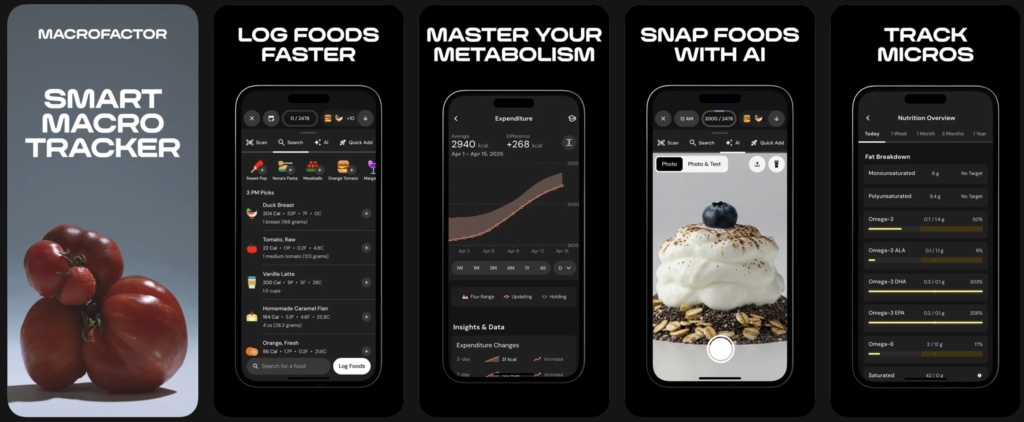
MacroFactor is a nutrition and macro tracking app that centers on adaptive coaching. Its official listings highlight a dynamic algorithm, weekly check-ins, an expenditure estimate that adapts to changes in your metabolism, barcode scanning, custom foods, a verified food database, micronutrient tracking, recipes, habit tracking, and a period tracker. It is positioned as a premium, ad-free app rather than a free tracker with paid extras.
What is MyFitnessPal?
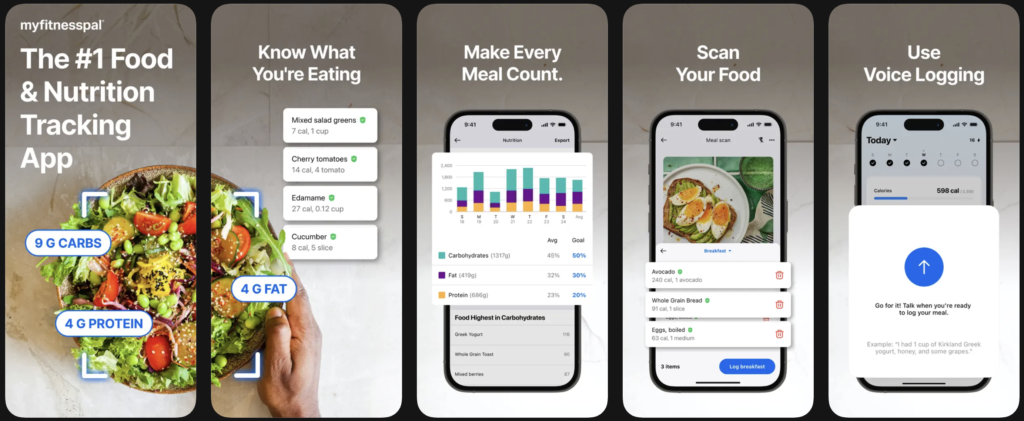
MyFitnessPal is a broader calorie and nutrition tracker with food logging, exercise logging, recipe tools, measurement tracking, partner app connections, and optional paid upgrades. Its App Store listing highlights AI nutrition coaching, a meal planner, 40+ fitness tracker and health app integrations, and Premium features such as barcode scan, meal scan, voice logging, custom goals, and an ad-free experience. Premium+ adds meal planning, meal prep tools, diet preferences, and grocery lists.
The biggest differences that actually matter
1. MacroFactor is coaching-first; MyFitnessPal is tracking-first
MacroFactor’s core pitch is that it adapts your calorie and macro targets based on the data you log and the app’s expenditure estimate, with weekly check-ins used to keep your plan aligned to your goal. That makes it feel closer to a nutrition coach than a plain food diary.
MyFitnessPal can absolutely track macros, but its structure is broader. The free plan is about building a logging habit, while Premium adds better logging tools and deeper analysis, and Premium+ adds meal planning. In other words, MyFitnessPal starts as a tracker and then layers on guidance.
2. MyFitnessPal is easier to try because it has a real free tier
This is one of the clearest practical differences. MacroFactor offers a free trial, but it does not offer a free subscription tier. MyFitnessPal has a free version, then paid Premium and Premium+ options if you want faster logging, deeper nutrition insights, or meal planning.
For many people, that alone decides it. If you are not sure you will stick with tracking, MyFitnessPal is the lower-risk starting point. If you already know you want structured macro coaching, MacroFactor’s paid-only approach may feel more focused and less cluttered. That second sentence is analysis based on each app’s pricing and feature model.
3. MacroFactor looks better for serious macro dieters; MyFitnessPal looks better for general users
MacroFactor officially emphasizes verified food data, micronutrient tracking, custom foods, smart history, recipe support, and a timeline-style log that is not locked to a set number of meals. Those details are the kind of things experienced macro trackers usually care about.
MyFitnessPal’s official positioning is broader: logging food and exercise, connecting partner apps, using barcode scan and Meal Scan, setting goals, and optionally using a meal planner. That package is easier to understand for mainstream weight-loss users or anyone who wants one app that does a little bit of everything. That last point is analysis based on the listed features.
4. MyFitnessPal has the wider ecosystem
MyFitnessPal’s App Store listing says it connects 40+ fitness trackers, smartwatches, and health apps, and it also promotes community features. MacroFactor does mention integrations, but its official materials are much more focused on nutrition coaching than on social or ecosystem breadth.
If you want an app that sits in the middle of a broader health stack, MyFitnessPal has the clearer official advantage. If you care more about the quality of calorie and macro guidance inside the tracker itself, MacroFactor makes the stronger case. That is an editorial conclusion drawn from the official feature emphasis of both apps.
5. Ads and monetization feel different
On Google Play, MyFitnessPal is listed as containing ads and in-app purchases. MacroFactor is positioned as a premium, ad-free app. That difference changes the feel of each product: MyFitnessPal tries to serve both free and paid users, while MacroFactor is built around paying subscribers from the start.
Pricing and subscription comparison
| Plan | MacroFactor | MyFitnessPal |
|---|---|---|
| Free plan | No. | Yes. |
| Free trial | 7-day trial. | 7-day trial for eligible users who have not upgraded or redeemed a trial before. |
| Monthly | $11.99/month. | Premium: $19.99/month; Premium+: $24.99/month. |
| Half-year | $47.99/half year. | No half-year option shown in the official pricing pages cited here. |
| Annual | $71.99/year. | Premium: $79.99/year; Premium+: $99.99/year. |
| Renewal model | Auto-renewing subscription; Google Play says cancel at least 24 hours before the current period ends. | Trial converts to paid unless canceled first, according to the official Premium+ page; Premium and Premium+ are sold as recurring plans. |
From a pure paid-value angle, MacroFactor is cheaper than MyFitnessPal Premium on both monthly and annual pricing, and much cheaper than Premium+. MyFitnessPal’s counterargument is that it gives you a free entry point, which MacroFactor does not.
What users seem to like
MacroFactor: visible recent App Store and Google Play reviews often praise the app’s ease of use, adaptive approach, clean macro tools, recipe builder, food database quality, and flexibility for cutting, maintaining, or bulking. Some reviewers explicitly compare it favorably against MyFitnessPal. This is not a scientific review study, but the current visible review themes are consistent.
MyFitnessPal: visible recent reviews commonly praise the app’s ease of use, food scanning, long-term usefulness for calorie tracking, and support for weight-loss or bodybuilding goals. Users also seem to like newer features such as meal planning when they fit their workflow. Again, this is a review-theme summary rather than a formal sentiment analysis.
Common complaints
MacroFactor: the main knocks visible in current reviews are that the app can feel overwhelming at first, and some users dislike recent visual or icon changes or want certain logging tools to be smarter. Those complaints sound more like refinement issues than fundamental trust issues, at least from the reviews visible here. That final clause is an inference.
MyFitnessPal: the recurring complaints are more familiar for a mass-market app: paywalls around premium features, requests for better label scanning or logging workflows, and occasional bugs or friction around recipes and navigation.
Pros and cons
| App | Pros | Cons |
|---|---|---|
| MacroFactor | Adaptive coaching is its clearest differentiator. Verified food database, recipe tools, micronutrients, habit tracking, and period tracking. Premium-only and ad-free. Cheaper than MyFitnessPal Premium on listed monthly and annual pricing. | No permanent free tier. Smaller review base and ecosystem than MyFitnessPal. The ecosystem part is an inference from store listings and official feature emphasis. May feel more advanced than some beginners want. |
| MyFitnessPal | Free plan is available. Broad feature set with logging, partner app connections, community elements, and 40+ integrations. Premium adds faster logging tools; Premium+ adds meal planning and grocery tools. Huge review volume and mainstream familiarity. | Premium pricing is higher than MacroFactor. Android listing contains ads on the free app. User complaints more often mention paywalls and occasional bugs. |
Who should choose MacroFactor?
- You already know you are willing to pay for nutrition tracking.
- You want adaptive calorie and macro targets instead of just a place to log food.
- You care about verified food data, micronutrients, and a more coach-like experience.
- You would rather avoid ad-supported free-app design.
Who should choose MyFitnessPal?
- You want to start free and only pay later if you need more.
- You want strong logging basics plus lots of integrations and a familiar interface.
- You want meal planning and grocery-list tools in the same app.
- You prefer a more general health-tracking platform over a macro-specialist tool. That last point is an editorial interpretation of the official feature sets.
So, is MacroFactor better than MyFitnessPal?
For serious macro tracking, dieting phases, and users who want their calorie targets to adapt over time, MacroFactor is the stronger pick in my view. It has the more focused value proposition, a higher visible rating on both major stores, and lower listed paid pricing than MyFitnessPal Premium.
For beginners, casual users, or anyone who wants a free plan and a broader all-in-one ecosystem, MyFitnessPal is still the easier recommendation. Its free tier removes the biggest barrier to entry, and its Premium+ tier now gives it a clearer meal-planning angle than MacroFactor.
Final thoughts
If your main question is “Which app will help me track calories and macros with the least friction?”, MyFitnessPal is the safer general-purpose answer because it is free to start and widely used. If your question is “Which app is more likely to feel like an intelligent macro coach?”, MacroFactor is the better answer. Neither choice is wrong, but they serve slightly different users.
Best pick overall for advanced macro tracking: MacroFactor. Best pick overall for free tracking and mainstream flexibility: MyFitnessPal. Those are editorial conclusions based on the pricing, feature sets, and store data cited throughout this comparison.
Leave a Reply