

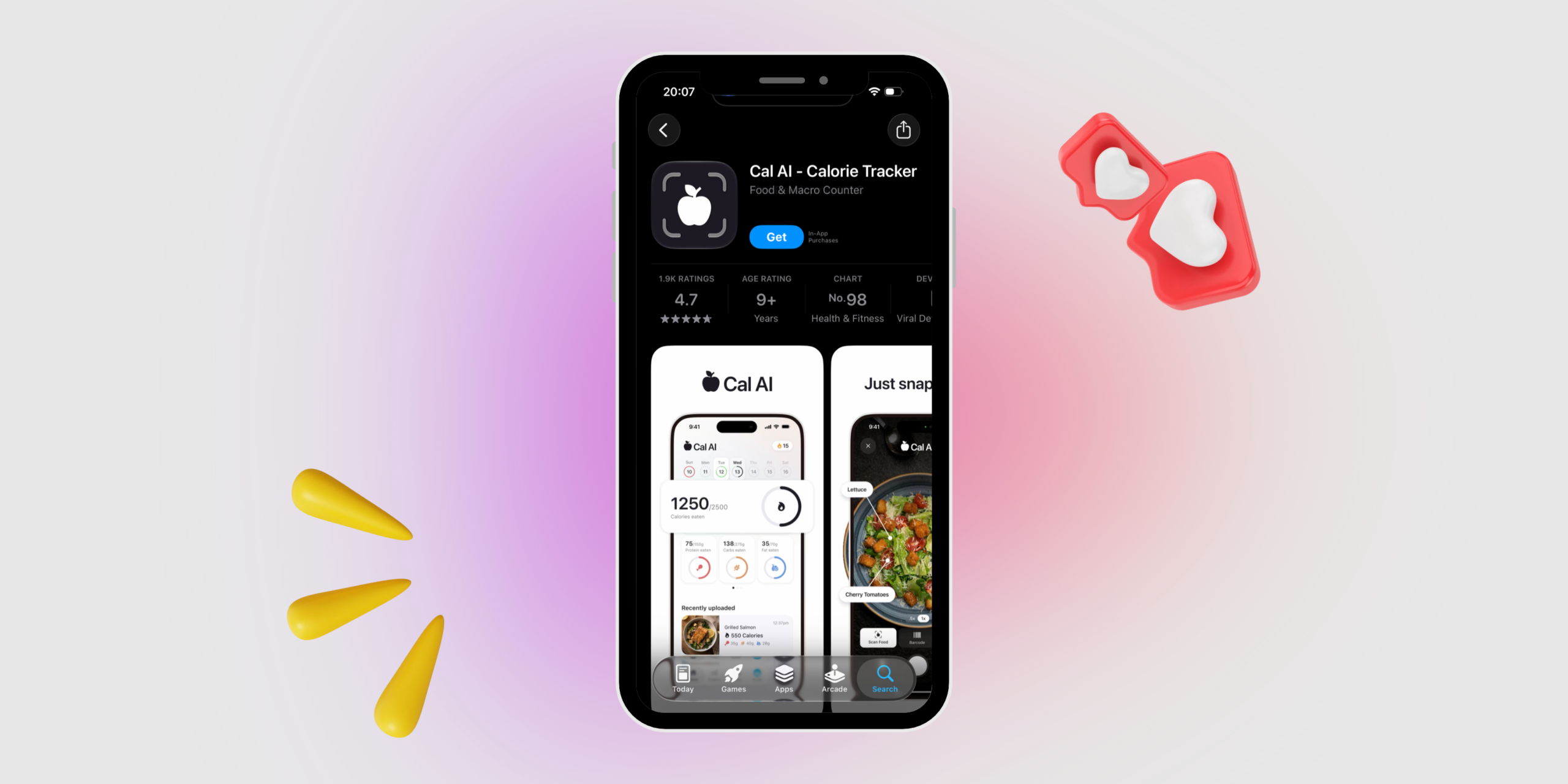
If you are asking whether Cal AI is worth it, the short answer is: it can be, but mostly for convenience-first users. Cal AI is built to make food logging faster with photo scans, barcode scans, and quick nutrition estimates. That convenience is real. But the trade-off is accuracy: the company’s own FAQ says the app is only about 80% accurate, the App Store listing says food-scanning analysis requires a subscription, and several of the public store reviews complain about incorrect nutrition data, glitches, or billing frustration.
Quick summary
| Category | Bottom line |
|---|---|
| Verdict | Worth trying if you want faster calorie logging and can live with estimates. |
| Best for | Beginners, casual dieters, and people who hate manual food-database logging. |
| Not ideal for | Anyone who needs precise macros, sodium, fiber, or highly consistent scan results. |
| Main upside | Very fast logging workflow with photo, barcode, and manual options. |
| Main drawback | The app’s own help page sets expectations at about 80% accuracy, not exact tracking. |
| Subscription note | The core scan feature is tied to a paid subscription, and the website promotes a 3-day free trial. |
The summary above is based on Cal AI’s official website, FAQ, App Store listing, Google Play listing, and the public reviews visible on those store pages as checked on November 9, 2026.
App Store and Google Play ratings
| Platform | Rating | Number of ratings/reviews |
|---|---|---|
| Apple App Store (U.S.) | 4.8/5 | 375K ratings |
| Google Play (U.S.) | 4.5/5 | About 270K+ reviews |
The U.S. Google Play listing showed 272K reviews in the header and 270K in the ratings section during the same crawl, so “270K+” is the most careful way to present it.
What is Cal AI?
Cal AI is an AI calorie-tracking app that asks lifestyle questions, lets you snap a picture of a meal, and returns estimated calories and macros. Its public pages also highlight barcode scanning, describing meals in words, exercise and water tracking, and syncing with Apple Health on iPhone or Google Fit on Android. The iOS listing shows support for iPhone and Apple Watch, while the Android version is distributed through Google Play.
The core pitch is simple: reduce the time and hassle of calorie tracking. That is the main reason Cal AI has traction. The official site presents it as a faster alternative to manual logging, and positive App Store feedback often praises the app for being easier to use than traditional calorie counters.
Why some people think Cal AI is worth it
Fast logging is the real selling point
If you hate typing in ingredients or searching huge food databases, Cal AI makes sense on paper. The official pages focus heavily on taking a meal photo, and App Store reviewers on the public listing repeatedly say it feels much faster and less annoying than older calorie-counting apps.
It gives you more than one way to log food
Cal AI is not only a photo scanner. Its public site says you can snap a photo, scan a barcode, or describe your meal, and visible App Store feedback also mentions nutrition-label use plus the ability to adjust values manually. That flexibility matters because AI meal recognition is rarely perfect on its own.
The iPhone reception is especially strong
A 4.8/5 score from 375K App Store ratings is impressive, and even the Android side still sits at 4.5 stars with roughly 270K+ reviews. Those numbers do not prove the app is right for everyone, but they do show that a large number of users find enough value to rate it positively.
Pricing and subscription: what you should know first
Cal AI is free to download, but the iOS App Store listing explicitly says that food-scanning analysis results require a subscription. The official website also advertises a 3-day free trial and says you can cancel anytime, but cancellation happens through Apple or Google account settings rather than inside the app itself.
One drawback is pricing transparency. The public iOS App Store page shows in-app purchase entries at $2.99, $5.99, $9.99, $19.99, and $29.99, plus a $0.99 “Streak Restore,” but the public listing does not clearly label every price by billing period. Because of that, you should read the paywall carefully before confirming any trial or plan.
There are two more subscription details worth knowing. First, Cal AI says deleting the app does not cancel your subscription. Second, subscriptions do not transfer between iPhone and Android, so if you switch platforms, the FAQ says you would need to subscribe again on the new one.
How accurate is Cal AI?
This is where the app becomes much harder to recommend without qualifications. Cal AI’s own FAQ says the app is about 80% accurate and that calories and nutrition values can vary. That is a much more grounded claim than the more aggressive store-page marketing language that describes the tracker as highly or “insanely” accurate.
That does not mean the app is useless. It means you should treat scan results as estimates, not exact nutrition truth. For broad calorie awareness, that may be good enough. For precise macro planning, clinical nutrition tracking, or health-related monitoring, it is a meaningful limitation. That second sentence is my analysis based on Cal AI’s own accuracy note and the review patterns below.
What users like about Cal AI
In the public App Store reviews visible on the listing, the most common praise is about convenience. Users like the quick scan workflow, the barcode and nutrition-label tools, the ability to edit values manually, the meal-memory feature, and the cleaner look compared with more old-school food trackers. One featured review also said the results were often reasonably close after the user checked them against other sources, even though they were not perfect.
That is the best argument in Cal AI’s favor: if it is easy enough that you actually track your meals consistently, it can still be useful even when the data is only approximate. In other words, Cal AI works best as a friction-reducer, not as a precision instrument. That is an inference, but it fits both the product design and the visible user feedback.
Common complaints you should take seriously
Accuracy complaints are not rare
The biggest recurring issue is inaccurate food data. On the public store pages, users complain about barcode mismatches, wrong serving sizes, inconsistent calorie counts for the same meal, and micronutrients such as sodium or fiber being way off. That lines up with the company’s own 80%-accuracy disclaimer.
Android feedback looks more mixed
The visible Google Play reviews are noticeably harsher than the iPhone examples shown on the App Store page. Complaints include glitchy behavior, hanging searches, calories varying by hundreds between scans, badge issues, and confusion around trial or yearly billing. The Android rating is still good overall, but it clearly suggests a more uneven experience than the iPhone score.
It is not ideal for power users switching from other trackers
If you already have a detailed logging workflow elsewhere, there is another limitation: Cal AI says it does not currently support direct MyFitnessPal history imports. For users with years of logged data, that can make switching feel more manual than expected.
Privacy and data-sharing considerations
If privacy matters to you, do not skip the disclosures. Apple’s App Store privacy label says identifiers and usage data may be used to track you across apps and websites owned by other companies. Google Play says the app may share personal info with third parties, may collect personal info plus health and fitness data, encrypts data in transit, and lets users request deletion.
Cal AI’s privacy notice says it collects personal information directly from users, automatically through the service, and from third parties. It also says some website cookie practices may count as “sharing” or targeted advertising under certain privacy laws. That does not make the app unusual for its category, but it does mean privacy-sensitive users should read the policy before regularly uploading meal photos and health-related data.
Pros and cons
Pros
- Fast, lower-friction calorie logging centered on meal photos instead of database digging.
- Multiple ways to log food, including photo scan, barcode scan, and meal description.
- Strong App Store score and large public review volume on both major platforms.
- Clear help documentation for cancellations, refunds, and syncing with Apple Health or Google Fit.
Cons
- Cal AI itself says the app is only about 80% accurate, and store reviews show that some errors are significant.
- The app’s main scan feature is effectively behind a subscription paywall.
- Public pricing is not very transparent about each billing term, and subscriptions do not cancel in-app or transfer across iPhone and Android.
- Not a strong fit for users who need precise sodium, fiber, or macro tracking without double-checking results.
Who is Cal AI best for?
Cal AI makes the most sense for people who want quick, approximate calorie awareness and are more likely to stay consistent with a photo-first app than with a manual tracker. It is also better suited to casual weight-loss logging than to high-precision nutrition work. That is my conclusion from the app’s design, its official feature set, and its stated accuracy level.
It makes less sense for users managing blood pressure, sodium intake, medical nutrition goals, or serious bodybuilding-style macro planning, because the visible review complaints and Cal AI’s own FAQ both point to meaningful variability in results.
Final verdict: is Cal AI worth it?
Yes, Cal AI can be worth it for convenience. No, it is probably not worth it for precision. If you mainly want a faster way to log meals and you are comfortable checking the occasional outlier, the app has a believable use case and strong enough store ratings to justify a trial. But if you expect exact nutrition data, a robust free tier, or zero billing friction, the current public evidence is much less convincing.
My practical advice: try Cal AI only if you are prepared to read the paywall carefully, cancel through your Apple or Google subscriptions settings if it is not for you, and treat the scan result as a helpful estimate rather than a final answer.
Leave a Reply