

Fitbod and Hevy are two of the most popular strength-training apps, so it makes sense that lifters compare them before subscribing. On the surface, both help you log workouts, track progress, and stay consistent in the gym. Both are built around weight training, both support exercise history, and both aim to make structured training easier than using notes or spreadsheets.
The difference is mostly in philosophy. Fitbod is designed more like an intelligent workout generator that builds sessions for you based on your equipment, recovery, and training history. Hevy is more like a polished lifting log with strong tracking, routines, and social features, giving you more control over what you do in the gym. In other words, this comparison is less about which app has “more features” and more about whether you want the app to plan for you or simply help you manage your own program.
Fitbod vs Hevy — Full Comparison Table
| Feature | Fitbod | Hevy |
|---|---|---|
| Core purpose | AI-powered workout planning and strength training guidance | Workout logging, program tracking, and lifting progression |
| Best for | Users who want workouts generated for them | Users who want a clean, flexible lifting log |
| Primary audience | Beginners to intermediate lifters, busy gym-goers, people who want guidance | Gym regulars, strength athletes, users following their own routines |
| Ease of use | Easy to start, but more opinionated | Very easy, especially for logging and tracking |
| Design style | Functional and data-driven | Clean, modern, and visual |
| Main strengths | Workout recommendations, recovery-based planning, automation | Logging, customization, routine tracking, social/community features |
| Main limitations | Less control over exact programming, subscription-based | Less “smart” automation than Fitbod, more manual setup |
| Free version | Limited | Stronger free tier for basic use |
| Paid plan / pricing model | Subscription | Free plus optional premium subscription |
| Platforms | iOS, Android, web features may be limited depending on region/version | iOS, Android, web |
| AI features | Yes, core feature | Limited compared with Fitbod |
| Customization | Moderate | Strong |
| Integrations | Limited compared with broader fitness ecosystems | Good sharing/export options; integration depth can vary |
| Offline access | Limited/offline behavior may vary | Generally useful for gym logging, but sync is still important |
| Ratings | Generally well regarded, especially for workout generation | Generally well regarded, especially for usability and logging |
| Common criticism | Subscription cost, repetitive workout suggestions, less control | Missing advanced automation, some features locked behind premium |
The biggest difference is simple: Fitbod builds the workout for you, while Hevy helps you run your own training more efficiently. That makes Fitbod more automated and Hevy more flexible.
What Is Fitbod?
Fitbod is a strength-training app that generates workouts based on your goals, available equipment, workout history, and recovery status. Instead of asking you to build every session from scratch, it tries to decide what you should train next and how hard you should push. That makes it especially appealing if you want less planning and more doing.
The app is built around guided progression. It can suggest sets, reps, weights, and exercise order while adapting over time as you log sessions. For people who don’t want to think too much about programming, that can be a major advantage.
Fitbod stands out because it leans heavily into automation. It is not just a tracker; it tries to act like a workout assistant. That makes it different from a standard workout journal or lifting log.
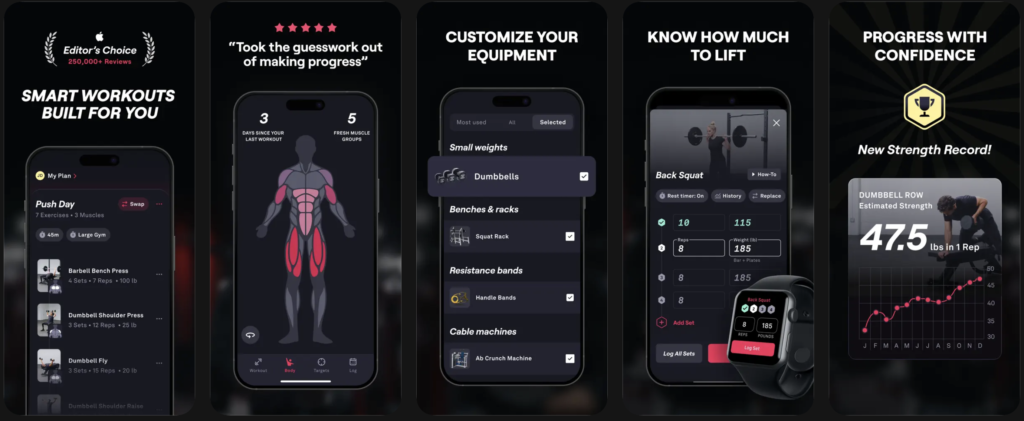
It is best for people who want structure, are training regularly, and prefer a system that reduces decision fatigue. It can also help newer lifters who feel overwhelmed by planning.
Where Fitbod may fall short is in flexibility. If you already have a training program you want to follow exactly, Fitbod’s recommendations may feel unnecessary or overly prescriptive. Some users also find the exercise suggestions repetitive over time.
Key strengths of Fitbod:
- Generates workouts automatically
- Adapts to recovery and training history
- Good for reducing planning time
- Helpful for beginners and intermediate lifters
- Supports a wide range of gym equipment
- Encourages progressive overload and consistency
What Is Hevy?
Hevy is a workout tracking app focused on logging strength training sessions, building routines, and monitoring progress over time. It is designed for people who already know what they want to do in the gym and need a fast, attractive way to record it.
Compared with Fitbod, Hevy gives users more control. You can build your own routines, customize exercises, and track performance in a very straightforward way. That makes it especially useful for lifters who follow their own program or who want a digital version of a traditional training notebook.
Hevy is also known for its clean interface and smooth logging experience. It is one of the easier lifting apps to use during a workout because the workflow is simple and the app is designed around quick entry.
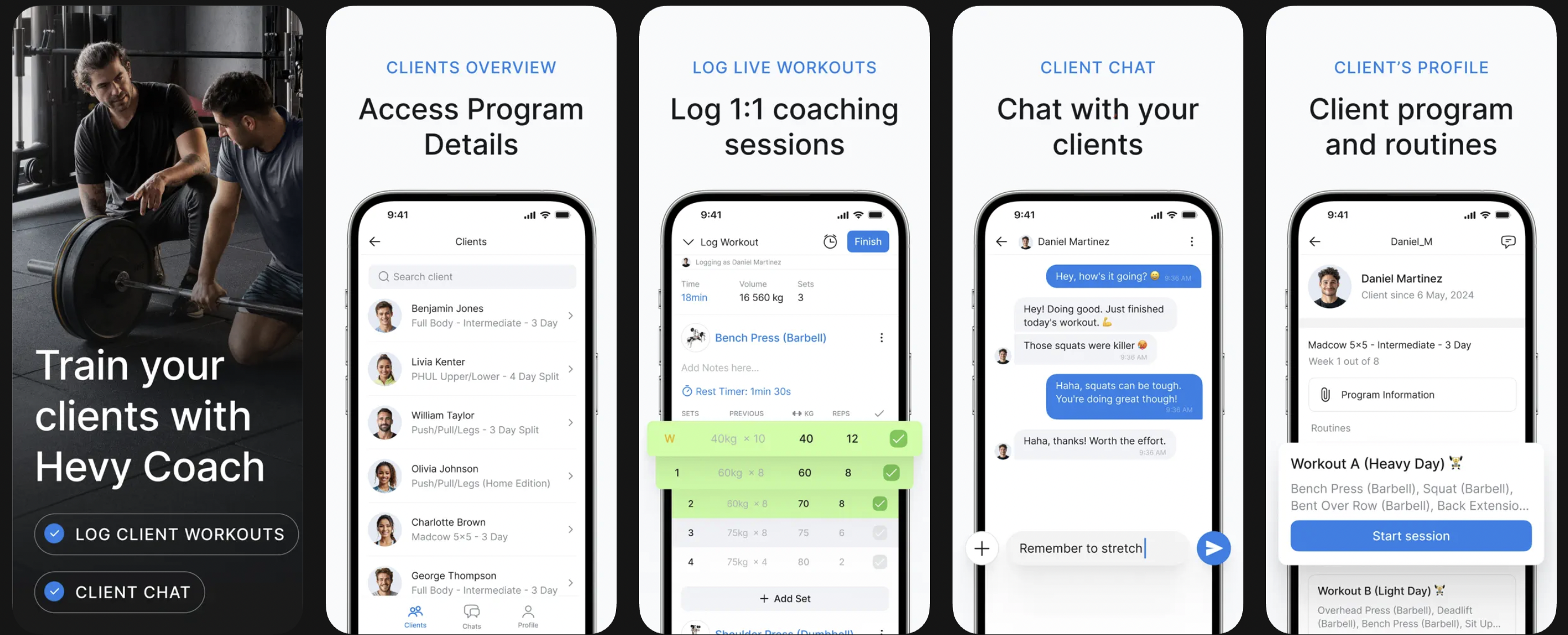
Another advantage is its community aspect. Hevy includes social and sharing features that appeal to users who like seeing friends’ workouts or keeping a public training profile.
Its main limitation is that it is not as automated or “smart” as Fitbod. If you want the app to build workouts for you, Hevy may feel more manual. But for many serious lifters, that is a feature, not a flaw.
Key strengths of Hevy:
- Excellent workout logging experience
- Strong customization for routines and exercises
- Clean, modern interface
- Good for tracking progress over time
- Social and sharing features
- Useful for users following their own programs
Fitbod vs Hevy: Ratings and User Popularity
On the ratings side, Fitbod on the App Store sits at 4.8 from about 267K ratings, while Fitbod on Google Play shows 4.1 from about 28.2K reviews and 1M+ downloads. Hevy on the App Store has 4.9 from about 64K ratings, and Hevy on Google Play shows 4.8 from about 210K reviews and 5M+ downloads.
The review patterns also feel meaningfully different. Fitbod reviewers often highlight the app’s workout recommendations, customization, and the fact that it helps them stay consistent because they do not have to plan every session themselves. That makes it feel stronger for people who want guidance, structure, and an AI-led training flow.
Hevy reviews lean more toward simplicity, clean interface, fast logging, useful graphs, and routine planning. Users also mention the social side and how easy it is to swap exercises or follow a plan in the gym, which reinforces Hevy’s appeal for lifters who want a polished tracker first and coaching second.
In practical terms, Fitbod looks more like the “tell me what to do” option, while Hevy looks more like the “give me a clean tool to log and track everything” option. Both are well liked, but Hevy currently looks broader on Google Play by review volume and downloads, while Fitbod remains especially strong among users looking for AI-driven workout planning. Both also use in-app purchases, so the value question depends less on raw ratings and more on whether you want automation or control.
Fitbod vs Hevy: Pricing Comparison
Both apps use a subscription model, but they approach value very differently. Fitbod is the more premium option, with App Store pricing showing monthly plans at $12.99 and $15.99, plus annual options at $79.99 and $95.99 depending on storefront tier and legacy pricing. Fitbod’s own FAQ lists its direct website pricing as $15.99/month or $95.99/year.
Hevy is much cheaper and keeps a more usable free tier. Its App Store listing strongly positions it as a free workout tracker with optional Pro access, and current store pricing commonly appears at about $2.99/month, $23.99/year, with a lifetime option available on some storefronts. Because app pricing can vary by region and platform, it is best to treat those numbers as current listed examples rather than universal global pricing.
| Pricing area | Fitbod | Hevy |
|---|---|---|
| Free version | Limited free access / trial-style usage depending on current offer | Stronger usable free tier for basic workout logging |
| Monthly plan | $12.99–$15.99/month on App Store listings; $15.99/month on Fitbod website | Around $2.99/month on current App Store listings |
| Yearly plan | $79.99–$95.99/year on App Store listings; $95.99/year on Fitbod website | Around $23.99/year on current App Store listings |
| Lifetime purchase | No common lifetime option shown | Lifetime option available on some storefronts |
| Best value for | Users who want automated workout generation and recovery-based planning | Users who want a strong free log or affordable premium tracking |
For budget-conscious users, Hevy is usually the easier starting point because the free version is more practical and the upgrade cost is much lower. Fitbod can still be worth it for people who specifically want AI-style workout generation and built-in guidance, but only if they will actually use that coaching layer enough to justify the higher price.
Free vs Paid Features
| Feature | Fitbod Free | Fitbod Paid | Hevy Free | Hevy Paid |
|---|---|---|---|---|
| Core functionality | Limited | Full workout generation and tracking | Basic logging | Full logging and advanced features |
| Reminders / notifications | Limited | Yes | Limited | Yes |
| Sync | Limited | Yes | Yes | Yes |
| Widgets | Limited | May vary | Limited | Better support depending on platform |
| Repeating tasks / habits / automations | Some guidance | Strong automation | Manual routines | Better routine management |
| Calendar or third-party integrations | Limited | Limited-to-moderate | More focused on exporting/sharing | Better support for power users |
| AI tools | Core value in paid version | Strong | Minimal | Limited |
| Personalization | Basic | Strong | Good | Stronger |
| Export / sharing | Limited | Better | Yes | Better |
| Offline access | May vary | May vary | Useful for gym logging | Useful for gym logging |
Features Comparison: Fitbod vs Hevy
Ease of use
Fitbod is easy to begin with because it removes a lot of decision-making. You answer a few setup questions, and the app starts building workouts. That said, the tradeoff is that it can feel a little less transparent if you want to understand exactly why certain exercises are being recommended.
Hevy is easier if your main goal is to log workouts quickly. The interface is built for fast entry, routine editing, and minimal friction during a session. Users who already know their training plan usually find it more natural.
Who benefits more:
- Fitbod: people who want guidance and less planning
- Hevy: people who want a fast, simple workout log
Planning & tracking
Fitbod is strongest at planning. It can suggest training volume, exercise selection, and progression in a more automated way than most logging apps. It is built to remove guesswork.
Hevy is stronger at tracking and organization. You can build routines, log sets and reps, view history, and monitor progress without the app trying to reshape your plan too much.
Who benefits more:
- Fitbod: users who want automatic workout creation
- Hevy: users who want a structured personal training log
Customization
Hevy generally wins on customization. You have more control over routines, exercise choices, and how you organize your training. That makes it better for people following a specific program.
Fitbod offers some customization, but it is still designed around its own recommendations. You can influence the experience, but not fully override the app’s logic without losing part of what makes it useful.
Who benefits more:
- Fitbod: users who want moderate customization with automation
- Hevy: users who want detailed control
AI features
This is where Fitbod stands out most clearly. Its AI-driven approach is the defining feature of the app. It tries to make smart decisions based on your previous workouts and recovery signals.
Hevy is much less automated. It focuses more on being an excellent manual log than a workout generator. That makes it better for users who do not want algorithmic training suggestions.
Who benefits more:
- Fitbod: users who want algorithmic workout planning
- Hevy: users who want to stay in charge of programming
Integrations
Fitbod has some integration support, but it is not usually the main reason people choose it. Hevy also offers sharing and export options, and its ecosystem is generally more centered around practical lifting workflows than broad app integration.
If integrations matter a lot to you—especially with calendars, wearables, or other health platforms—you should check the latest support carefully, since these features can change over time.
Who benefits more:
- Fitbod: users focused mainly on in-app workout planning
- Hevy: users who want clean export and sharing features
Cross-platform support
Both apps work across major mobile platforms, and Hevy is especially known for being convenient on mobile and web. Fitbod is primarily mobile-first, which works well for gym use but may feel more limited for users who want more desktop-style planning.
Who benefits more:
- Fitbod: mobile-first users
- Hevy: users who want flexible access across devices
Design and interface
Fitbod looks functional and data-driven. It is clear and organized, but its real appeal is the logic behind the workout recommendations rather than visual flair.
Hevy is widely appreciated for its polished, modern interface. It feels more like a premium consumer app and less like a traditional training tool. Many users find that makes it more pleasant to use consistently.
Who benefits more:
- Fitbod: users who care about outcomes and automation
- Hevy: users who care about simplicity and aesthetics
Fitbod vs Hevy for Strength Training and Gym Logging
If your main goal is strength training with minimal planning, Fitbod is usually better because it acts like a coach that builds the session for you. If your main goal is clean, reliable gym logging, Hevy is usually better because it makes it easy to record exactly what you did and follow your own program.
For beginners, Fitbod can reduce confusion. For intermediate and advanced lifters, Hevy often feels more natural because it respects the structure they already use.
Real User Reviews: What People Like and Don’t Like
Fitbod users often praise:
- automatic workout generation
- convenience
- recovery-based planning
- help with consistency
Fitbod users often complain about:
- subscription pricing
- repeated exercise recommendations
- less control over programming
- occasional suggestions that feel too generic
The happiest Fitbod users are usually people who want the app to do the thinking for them. Criticism is mostly about pricing and the limits of automation rather than basic usability.
Hevy users often praise:
- fast logging
- clean interface
- customizable routines
- progress tracking
- social/community feel
Hevy users often complain about:
- premium gating for advanced features
- lack of stronger AI/workout generation
- wanting deeper analytics or automation
The happiest Hevy users are usually self-directed lifters who already know how they want to train. Criticism tends to focus on missing advanced features rather than usability problems.
Which One Should You Choose — Fitbod or Hevy?
Choose Fitbod if…
- you want the app to build workouts for you
- you prefer less planning and more training
- you are new to lifting or want more guidance
- you train in a gym with varied equipment
- you like automation and recovery-based suggestions
- you do not mind paying for convenience
Choose Hevy if…
- you already follow your own training program
- you want a clean, fast workout log
- you care about customization and control
- you want a stronger free option
- you like tracking progress manually
- you prefer a polished, user-friendly lifting app
Final verdict: There is no universal winner here. Fitbod is better for people who want an intelligent workout generator and are happy to pay for automation. Hevy is better for lifters who want a flexible, well-designed log for their own program. If you want the app to think for you, choose Fitbod. If you want the app to stay out of the way and help you track your training, choose Hevy. For most budget-conscious lifters, Hevy is the safer choice; for users who value guided programming more than control, Fitbod is often worth the subscription.
FAQs
1. Is Fitbod better than Hevy for beginners?
Fitbod is usually better for beginners who want guidance, because it creates workouts automatically. Hevy can still work well, but it is more manual.
2. Is Hevy better for serious lifters?
Often yes, especially for lifters who already have a program and mainly need a reliable log and progress tracker.
3. Does Fitbod have a free version?
Fitbod’s free access is limited compared with Hevy, and the app is mainly designed around its paid experience.
4. Is Hevy good for tracking strength progress?
Yes. Hevy is one of the better apps for logging sets, reps, weights, and routine history.
5. Which app is better value for money?
Hevy is usually better value for most users, especially if you want a useful free tier. Fitbod can be worth it if you specifically want workout automation.
6. Can I use either app offline in the gym?
Both are meant for real gym use, but offline behavior and sync details can vary. It is best to check the latest app support if offline access is important to you.
Leave a Reply